Non-medical home support for seniors covers the practical work of running a household: errands, light housekeeping, laundry, organizing, and a steady, friendly presence in the home. It does not include medication management, bathing, wound care, or health monitoring of any kind. Those tasks belong to licensed home health professionals. The line is easy to remember: non-medical support keeps the house working, while licensed clinicians care for the person.
Said plainly before anything else: The Tidy Sister is not a caregiver, nursing, or home health agency, and nothing in this article is medical advice. We provide non-medical household support only. For medical needs, contact a licensed home health provider.
There is a lot of useful territory inside that boundary. Most of what makes independent living hard has nothing to do with medicine. It is groceries, laundry, a tub that needs scrubbing, a garage nobody can walk through anymore. Our home concierge services exist for that layer of life, and this guide maps where the work starts and where it stops.
What counts as non-medical home support?
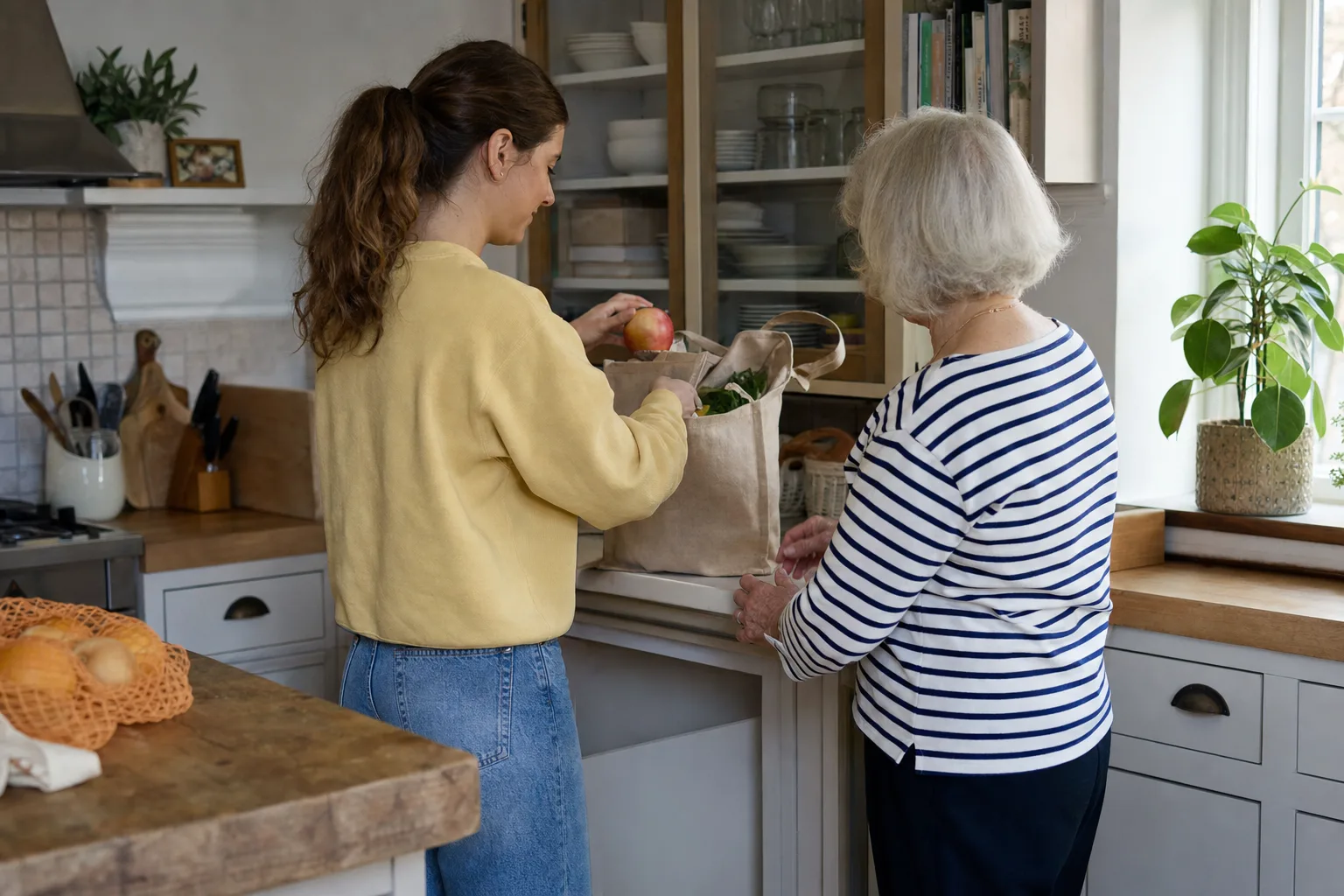
The term covers help in the home that requires no medical license and no hands-on personal care. A visit might mean putting away groceries, running a vacuum, folding three loads of laundry, sorting a month of mail into keep and toss piles, or resetting a kitchen so cooking feels manageable again. The person doing the work comes from an insured household services company, not a clinic.
The Tidy Sister has been in Gresham homes since February 2015. Melissa built the company on house cleaning, and the concierge side grew the way these things honestly do: longtime clients aged, their needs widened past cleaning, and they asked whether we could also grab groceries or keep the recycling schedule straight. We could. We still say no to anything medical, every time, because the no is what makes the yes trustworthy.
What does non-medical home support cover?
Quotes at The Tidy Sister are built around the actual home and the actual list rather than a flat menu, so the specifics flex. The covered territory generally looks like this:
- Errands. Groceries, post office runs, returns, dry cleaning, and pharmacy pickups. On that last one: we collect the sealed bag. Everything about its contents stays between your parent, their doctor, and the family.
- Light housekeeping. Dishes, counters, bathrooms, floors, and trash out on the right day. Homes that want a deeper reset pair concierge visits with recurring house cleaning.
- Laundry. Washing, drying, folding, and putting things back on shelves that hands can comfortably reach.
- Organizing. Pantries, closets, paperwork piles, and the guest room that quietly became a storage unit.
- A familiar presence. Someone who shows up on schedule and notices small things: a burned-out porch light, a mailbox filling up, milk that expired last Tuesday.
Families often ask about rides to appointments and outings. ‹confirm: whether rides/transportation for clients are included in Tidy Sister’s concierge scope›
What will a non-medical provider never do?
This list matters more than the first one, and a trustworthy company recites it without being asked:
- Medication management. No sorting pills, no dosing decisions, no supervision of what gets taken when.
- Personal care. No bathing, dressing, toileting, or helping someone in and out of bed or a chair.
- Medical monitoring. No blood pressure checks, no wound care, no health assessments of any kind.
- Medical judgment. If something in the home worries us, we tell the family. We never interpret it.
If a company offering household help gets vague about these lines, keep shopping. Hands-on personal care and in-home clinical work sit under licensing requirements for good reason, and the people qualified for that work carry training we have never claimed.
A quick way to test any provider: ask them directly what they refuse to do. A good company answers in one breath and sounds relieved you asked. A concerning one hedges, says it depends, or hints they can make exceptions for the right client. Exceptions in this territory are how someone’s parent gets hurt, and how a family ends up with no insurance coverage behind the person who was in the home when it happened.
A spotless kitchen and a finished errand list will never manage anyone’s medication, and we will not pretend otherwise.
How is this different from home care and home health?
Families shopping for help run into three overlapping terms, and brochures rarely define any of them. Here is the honest sorting:
| Question | Home support (non-medical) | In-home care (caregivers) | Home health (clinical) |
|---|---|---|---|
| Who does the work? | Household professionals from an insured home services company | Trained caregivers, usually through a licensed agency | Nurses and therapists working under medical orders |
| What do they handle? | Errands, housekeeping, laundry, organizing, presence | Personal care: bathing, dressing, mobility help | Skilled care: wounds, medication, therapy |
| Hands on the person? | No, the work stays on the household | Yes, daily personal care | Yes, clinical care |
| Best first call when | The house and the errands are the struggle | Daily personal routines need help | A doctor says skilled care is needed |
Plenty of Gresham households use two columns at once. A nurse handles the clinical visit on Tuesday while we keep the laundry moving and the fridge stocked for the rest of the week. The categories cooperate well. They should never blur.
Wondering which kind of help fits?
Describe a normal week and we will say honestly whether concierge support fits, or whether a licensed provider should come first. Quotes are free and customized, and most people hear back within one business day.
Who actually uses non-medical home support?
A few real shapes this takes around Gresham. A widower in a one-level ranch near Hollybrook who cooks for himself but cannot kneel at a bathtub anymore. A retired teacher whose 1920s Craftsman near Main City Park has stairs she manages fine and baseboards she has no business crouching over to dust. A daughter in Portland who covers Saturday visits but cannot leave work every Wednesday for the grocery run.
It also shows up after hospital stays, in the specific window where someone is cleared to be home and independent but has been told to take it easy. Laundry baskets and grocery bags ignore that instruction. A few weeks of support keeps the household from becoming the reason recovery stalls, without anyone hovering.
The common thread is a household that still works, mostly, with a few gaps widening at the edges. Support fills the gaps before they turn into arguments or hazards. Adult children coordinating from across town tend to start with our practical checklist for helping a parent age in place in Gresham, then hand the recurring pieces to a company they trust.
What does a typical support visit look like?
We schedule visits Monday through Friday, between 8 AM and 8 PM, and we send the same person whenever possible. That consistency matters double with seniors: a stranger in the house every week is a stressor, while a familiar face is closer to company. Each visit runs a standing list agreed on with the family, in whatever order the household prefers, errands first or housekeeping first.
Where housekeeping is part of the visit, we clean without bleach. Harsh fumes and older lungs are a bad pairing, and health-conscious products handle a Gresham bathroom fine. Clients keep a working vacuum on hand plus a toilet brush in each bathroom, a hygiene policy that keeps us from carrying germs between the homes we serve.
Setting things up starts with a conversation, usually with an adult child and the parent together. We walk the home, build the standing list, and agree on what a normal visit accomplishes. The list is never carved in stone. Needs shift, and a monthly organizing visit sometimes grows into weekly errands over a year or two. The family adjusts the plan; nobody gets upsold into it.
When the family travels, the same steady attention can turn to the house itself. Our guide to home watch and house sitting covers how that works.
When is it time for more than non-medical help?
Some changes sit outside our lane, and pretending otherwise would be the least dignified thing we could do. Signals worth a call to your parent’s doctor include missed medications, new confusion about familiar routines, food safety slipping (the expired-milk pattern, repeated), unexplained bruises, or a fall of any size.
None of those mean independence is over. They mean a professional assessment should shape what comes next, and that assessment belongs to a physician or a licensed home health agency, never to a concierge company. Household support usually continues alongside whatever gets added. The nurse does not fold laundry, and we do not touch wound care; your parent needs both jobs done well.
The honest version: if something in a client’s home worries us, we call the family the same day and describe exactly what we saw. We do not assess it, and we do not sit on it. That phone call is part of the job.
The bottom line: the right help for the right job
Non-medical home support carries the household so your parent’s energy can go toward living, and so your visits can go back to being visits. It never substitutes for medical care, and any company blurring that line deserves your suspicion. If the gaps in a Gresham household are groceries, laundry, cleaning, and presence, our home concierge services in Gresham were built for exactly that list. Call 503-666-2255 or text 503-875-1189 and tell us about the week you are trying to hold together.

