
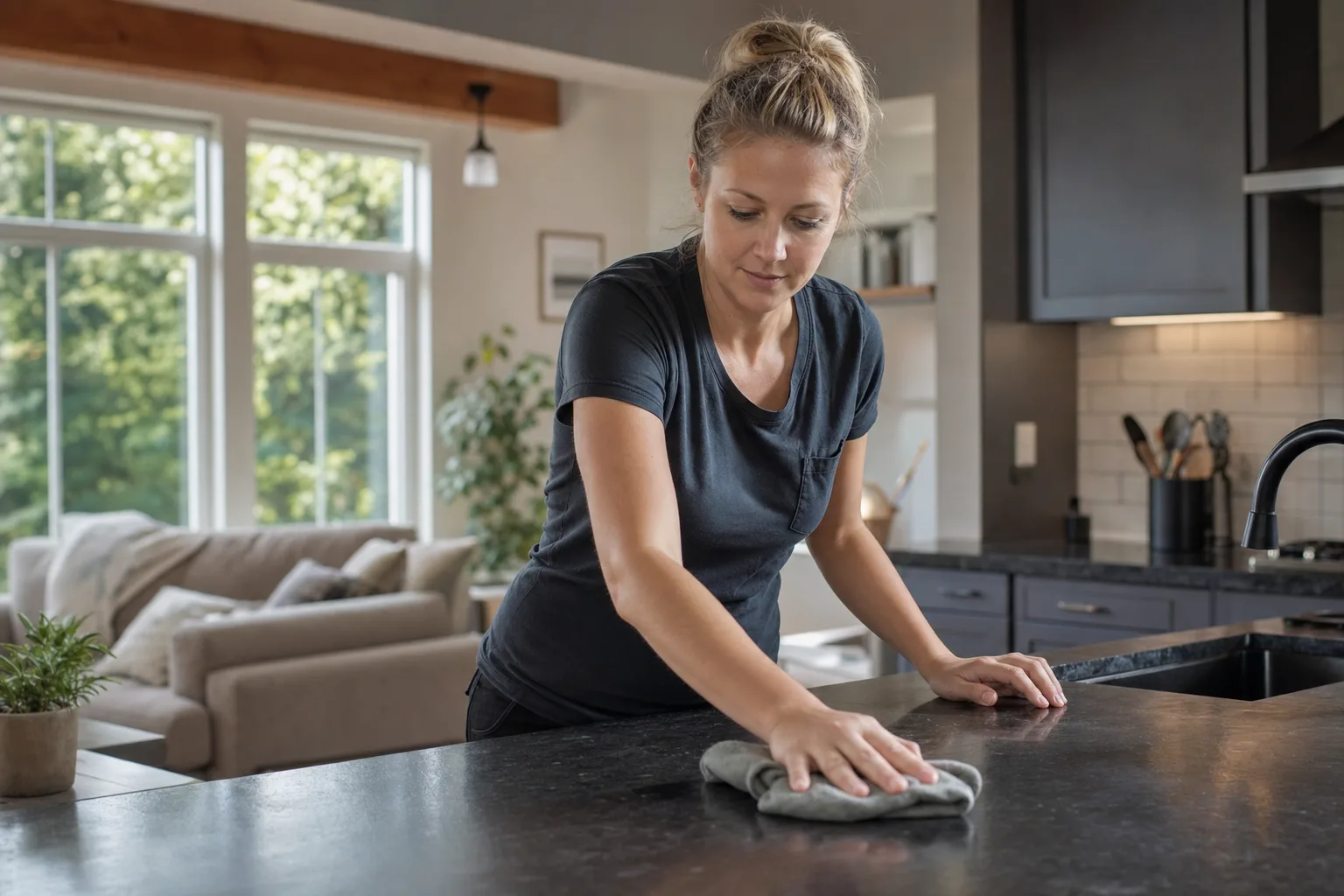
A standard house cleaning covers the whole living space at maintenance depth: counters, sinks, and appliance exteriors in the kitchen; toilets, tubs, showers, mirrors, and counters in the bathrooms; dusting of furniture and reachable surfaces throughout; vacuuming and mopping of all floors; and trash emptied. It does not include the inside of the oven or refrigerator, interior windows, laundry, or heavy buildup removal. Those are add-ons or separate services, and every company draws the lines a little differently.
“Standard” might be the least standardized word in this industry, which is why the smartest thing you can do before booking professional house cleaning is get the task list in writing. This guide walks the typical scope room by room, flags what usually costs extra, and shows you how to pin the details down before anyone lifts a cloth in your home.
What does “standard cleaning” actually mean?
A standard cleaning, sometimes called a general or maintenance cleaning, is the recurring service that keeps an already reasonable home clean. It handles the surfaces you live on and the dirt that accumulates in a normal week or two: dust, crumbs, soap film, toothpaste spatter, floor grime, fingerprints on the fridge. It is scoped and priced on the assumption that the home gets cleaned on some kind of regular rhythm.
That assumption is the whole difference between standard and deep cleaning. A deep clean digs into accumulation: baseboards, window tracks, mineral scale on fixtures, the grime line behind the kitchen faucet. A standard visit maintains what a deep clean, or your own past elbow grease, already established.
A standard cleaning is built to maintain a home, not to rescue one.
There is no industry rulebook behind the word, though. One company’s standard includes the inside of the microwave; another’s does not. At The Tidy Sister, quotes are customized from your home’s size, its condition, and the scope you want, so the task list gets agreed on before the first visit instead of discovered during it.
What gets cleaned room by room?
Exact lists vary from company to company, but a typical standard visit covers the following. Use it as a baseline for comparing services, and ask directly about anything on your list that is missing from theirs. Your housing matters here too: a 1920s Craftsman near Main City Park has picture rails, radiators, and original trim that collect dust in ways a newer Happy Valley build does not, while a Rockwood apartment might be a fast visit where the galley kitchen takes half the time. Good scope reflects the actual house.
Kitchen
- Counters and backsplash wiped down
- Sink and faucet scrubbed and shined
- Stovetop cleaned, with exteriors of the oven, refrigerator, and dishwasher wiped
- Microwave cleaned inside and out
- Cabinet fronts spot cleaned for drips and fingerprints
- Small appliances wiped, and wiped under where they can be lifted
- Floor vacuumed and mopped, trash emptied and relined
Bathrooms
- Toilet cleaned inside and out, base and hinges included
- Tub and shower walls, glass, and fixtures scrubbed
- Sink, counter, and faucet cleaned and dried
- Mirror polished
- Towels straightened, trash emptied
- Floor vacuumed and mopped into the corners
Bedrooms
- Beds made, with linens changed when you leave fresh sheets out
- Furniture, headboards, lamps, and window sills dusted
- Mirrors cleaned
- Floors vacuumed, hard floors mopped
- Reachable cobwebs removed from corners
Living areas, halls, and entry
- Reachable surfaces, shelves, and decor dusted
- Electronics dusted dry, screens left alone or dry wiped only
- Couch cushions straightened and throw blankets folded
- Light switches, door handles, and stair railings wiped
- Floors vacuumed and mopped, entry mats vacuumed or shaken out
What does a standard cleaning usually leave out?
The excluded list matters as much as the included one, because this is where booking surprises live. In a typical standard visit, do not expect:
- The inside of the oven or refrigerator
- Interior windows and window tracks
- Wall washing or scuff removal beyond a quick spot wipe
- Blinds beyond a light dusting
- Dishes, laundry, or ironing
- Decluttering and organizing, which is a separate service with separate skills
- Anything that requires more than a step stool to reach
- Moving heavy furniture to clean underneath it
- Mold remediation, pest cleanup, or biohazards
- Garages, patios, decks, and other exterior spaces
None of that reflects laziness. A standard visit is scoped to a predictable window of time, and a single oven interior can swallow an hour on its own. Pulling that hour out of the middle of a visit means something else on the list goes undone, so the industry prices those jobs separately, where they can be planned for. The same logic applies to decluttering: sorting your belongings requires decisions only you can make, which is why a cleaner works around the pile on the desk instead of reorganizing it.
Which extras can you add to a visit?
Add-ons let you bolt bigger tasks onto a scheduled visit in the weeks you actually need them, instead of paying for them every time. These are the common ones across the industry ‹confirm: The Tidy Sister’s current add-on menu and names›:
| Add-on | When it earns its place |
|---|---|
| Oven interior | Before holiday cooking, after a baking heavy season, at move out |
| Refrigerator interior | Periodic resets, before a big grocery restock, at move out |
| Interior windows | Spring, after grass pollen season, before hosting |
| Window tracks and sill detail | After a Pacific Northwest winter has done its work |
| Hand wiped baseboards | Homes with pets, toddlers, or freshly painted trim worth protecting |
Timing add-ons around real life beats buying them on a fixed rotation. An oven interior in early November earns its keep; the same add-on in July may just be a habit. Mention an add-on when you confirm the visit rather than on the day itself, since extra tasks need extra time built into the schedule.
Want the exact list for your home?
Tell us about your rooms, your floors, and what bugs you most, and we will build a free customized quote around it. Most people hear back within one business day.
Who brings the supplies and equipment?
Ask this before the first visit, because companies split it differently and the answer touches both hygiene and what ends up on your counters. At The Tidy Sister, clients provide exactly two things: a working vacuum and a toilet brush for each bathroom.
Worth knowing: the vacuum and toilet brush policy is about hygiene rather than convenience. Equipment that travels between houses can carry germs from one home into the next. Gear that lives at your house only ever touches your house, and you always know exactly what has been used on your toilets.
Products matter just as much as equipment. We clean without bleach as part of a health conscious approach, which is worth knowing if anyone in your home has sensitivities, or if you have a toddler or a dog who investigates everything at floor level. Whoever you hire, ask three things: what do you bring, what do you need from me, and what is in the products that will touch the surfaces where my family eats.
How is the first visit different from a routine one?
The first visit almost always works harder than the ones that follow. Even a well kept home carries quiet buildup in the places nobody thinks about weekly: shower glass film, dust settled behind the TV, the floor edges a vacuum’s wide head never quite reaches. Expect the first appointment to run longer, and expect the visits after it to feel smoother as your home reaches a baseline and holds there. If it has been a long time since the last professional cleaning, some companies will suggest a deeper first visit so the recurring schedule starts from zero instead of chasing old grime for months. A little light prep on your end helps too, and we wrote up how to prepare your home for a house cleaner without accidentally doing the cleaner’s job first. One more first visit tip: be home for it if you can. Ten minutes of pointing at things teaches a cleaner more about your standards than any checklist will.
How do you pin down the scope before you book?
Three moves prevent nearly every scope disappointment. First, get the task list in writing, whether that is a checklist, an email, or a line item quote. Second, walk the home with the company, in person or by phone, and point at what matters to you: the baseboards that bother you, the shower that never feels clean, the guest room nobody uses. Third, ask pointed questions about every ambiguous item: beds, blinds, interior glass, the microwave, ceiling fans. Our rundown of questions to ask before hiring a cleaning service covers the full interview, insurance and guarantees included. A good company will not flinch at any of it. Clear scope protects them exactly as much as it protects you.
The bottom line on what standard cleaning includes
A standard cleaning keeps kitchens, bathrooms, dusting, and floors at a steady baseline, with appliance interiors, interior windows, and laundry handled as add-ons when you actually need them. The word standard guarantees nothing; the written list does. If you want a scope built around your real home instead of a package, The Tidy Sister has provided professional house cleaning in Gresham since February 2015, with no bleach and the same regular cleaner whenever possible. Call 503-666-2255 or text 503-875-1189 for a free customized quote.


