House cleaning helps during Portland allergy season when it targets buildup instead of appearances: damp dusting rather than dry, slow HEPA vacuuming over carpet and upholstery, bedding washed hot and often, and real attention to the window sills, tracks, and entryways where pollen actually collects. Cleaning does not treat allergies, and nobody honest will tell you it does. What it does is reduce the allergen load that settles inside your home, which is the one part of the season you can control.
The Willamette Valley grows grass seed at a scale few regions on earth can match, and Gresham sits on the eastern edge of it, with fields running out toward Boring and Sandy. When grass pollen gets moving in late spring, it rides in on shoes, clothes, dogs, and every open window. This guide covers what a focused house cleaning routine honestly does about it, task by task.
Why is allergy season such an event around Portland?
Geography, mostly. The valley’s grass seed fields are famous among farmers and infamous among everyone with a sensitive nose. Grass pollen tends to run heaviest from late spring into midsummer here, with tree pollen making its appearance earlier in spring and weeds hanging on later. The exact calendar shifts with each year’s weather, so treat any dates as loose guidance rather than a schedule.
Rain is the wildcard. A good shower rinses pollen out of the air, which feels like mercy until you remember what follows rain in a Willamette Valley June: warm, dry, breezy afternoons that put everything right back up. Those bright days after a wet stretch are usually the heavy ones, and they are also the days everyone throws their windows open.
A local note: you do not need a pollen app to know when grass season starts in East County. Your windshield tells you. When the parked cars on your street wear a faint yellow green film, whatever is on the cars is also on your porch, your doormat, and your entry floor.
What actually builds up inside a house during the season?
Three things do most of the damage. Tracked-in pollen is the obvious one: it clings to shoes, pant cuffs, jackets, hair, and pets, then transfers to floors, couches, and beds. Dust mites are the quiet one: they like mild, damp climates such as ours, they live in bedding, upholstery, and carpet, and their debris is a common allergen in its own right. Pet dander rounds out the mix, and it travels on everything, including guests who own pets you have never met.
Here is the part people miss: a home does not need to look dirty to carry a heavy load. Pollen and dander are nearly invisible on a windowsill and completely invisible inside a sofa cushion. Allergy season cleaning is therefore about where particles settle and how they are removed, rather than about how rooms look at a glance.
Flooring changes the picture too. Carpet holds far more of everything than hard floors do, which cuts both ways: it stores allergens away from the air until someone walks across it, and then it releases them right at kid height. High traffic lanes, the hallway, the landing at the bottom of the stairs, and the strip in front of the couch deserve more vacuum passes than the corners nobody visits.
Which cleaning habits genuinely help, and which move dust around?
Method matters as much as effort. A dry duster mostly relocates fine particles into the air, where they hang for a while and settle right back down, often onto the surface you cleaned an hour earlier. A damp microfiber cloth traps them and carries them to the sink. The same logic applies to vacuums: a machine with weak filtration pulls fine dust off the floor and breathes a portion of it back into the room behind you.
| The habit | What it really does | The better move |
|---|---|---|
| Dry dusting with a feather duster | Lifts fine particles into the air to resettle elsewhere | Damp microfiber, rinsed often, so particles leave the house |
| Fast vacuuming with a tired filter | Exhausts fine dust back into the room air | Slow passes with HEPA filtration, emptied outdoors |
| Cleaning floors first, shelves later | Re-soils the floor you already finished | Work top to bottom in every room, floors last |
| Heavy air freshener sprays | Layer fragrance over the problem without removing anything | Ventilate at smart times and clean the source |
None of this is exotic. It is simply the difference between moving allergens around your house and escorting them out of it.
Where does pollen hide that most people miss?
Pollen concentrates at the borders of the house, the places where outside air and outside feet meet inside surfaces.
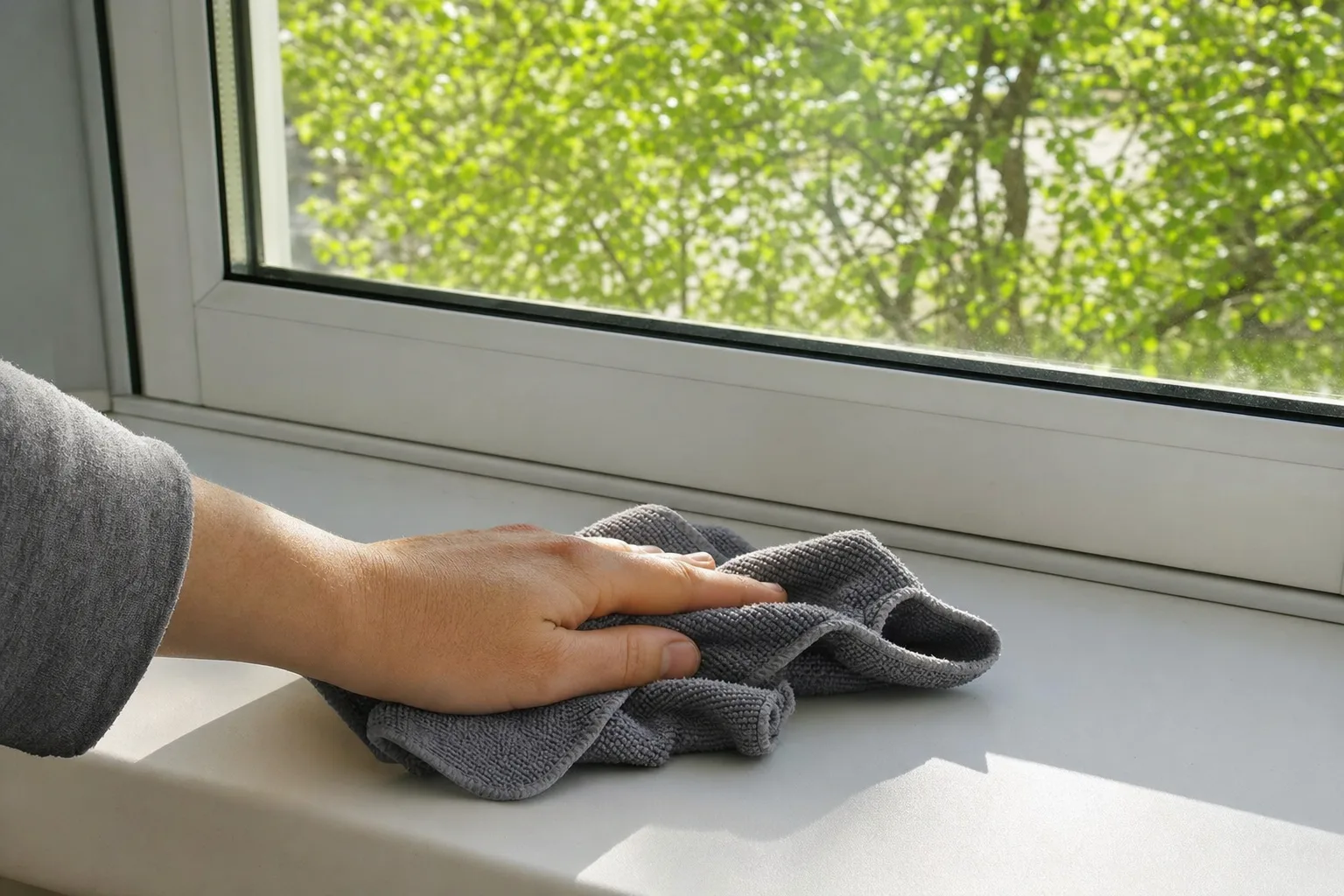
- Window sills and tracks, especially on the windows you actually open. Tracks collect a paste of pollen, dust, and Pacific Northwest damp that a quick wipe never reaches.
- Window screens, which strain pollen out of every breeze and hold it for the next one.
- Blinds, slat by slat, along with the tops of curtains and drapes.
- Ceiling fan blades, which store dust all spring and redistribute it the first warm night you switch the fan on.
- Entry mats, shoe piles, and the closet where damp jackets hang.
- Pet bedding, which collects dander plus whatever the yard was offering that day.
Window tracks earn a permanent spot on our Pacific Northwest spring cleaning checklist for exactly this reason: nine wet months leave them grimy right before pollen season asks you to open every window in the house.
How should you handle bedding and soft surfaces?
Bedding is the highest value target in the whole house. You spend hours every night with your face directly against fabric that collects skin cells, dander, and whatever your hair carried in from outside. During the season, wash sheets and pillowcases more often than your usual rhythm, on the hottest setting the care label allows. While the bed is stripped, run a vacuum with an upholstery attachment over the mattress itself. Washable covers for pillows and mattresses add a layer you can launder instead of live with.
Soft surfaces beyond the bed deserve the same suspicion. Upholstered furniture, throw pillows, blankets, and curtains all hold fine particles. Rotate the washable items through the laundry and vacuum the rest with the upholstery tool, including the crevices where cushions meet frames.
Two soft surface targets get overlooked in almost every home. Pillows themselves, under the cases, benefit from a trip through the wash if the label allows it, because the case is only the outer wall. And if you have kids, the stuffed animal population sleeps closer to their faces than anything else in the house. Washable ones go through the machine; the delicate ones can spend a few hours sealed in a bag in the freezer, a trick housekeepers have leaned on for generations.
You cannot keep pollen out of the Willamette Valley air. You can absolutely keep it from spending the whole summer in your carpet.
Ready for a pollen season reset?
A deep clean before grass season pulls winter’s buildup out of the corners so your daily habits can hold the line. Quotes are free and most people hear back within one business day.
What daily habits keep pollen outside where it belongs?
Cleaning removes what got in. Habits shrink what gets in, and they cost minutes rather than hours.
- Shoes off at the door. A tray or basket makes the rule self enforcing.
- Two doormats, one outside and one inside, both shaken out or vacuumed regularly.
- Time your ventilation: open windows after rain, close them on warm, dry, breezy afternoons and before bed.
- Wipe pets down after yard time. A dog’s coat is an efficient pollen taxi.
- Shower and change after mowing or yard work instead of settling onto the couch first.
- Change furnace and HVAC filters on the schedule the manufacturer recommends.
None of these are dramatic on their own. Together they lower the load your cleaning has to remove, which is the whole game from May onward. The garage entry deserves a special mention if that is how your family actually comes and goes: most households mat and manage the front door while everyone tracks the driveway in through the laundry room. Put the good mat where the real traffic is.
Can a deep cleaning reset the house before grass season peaks?
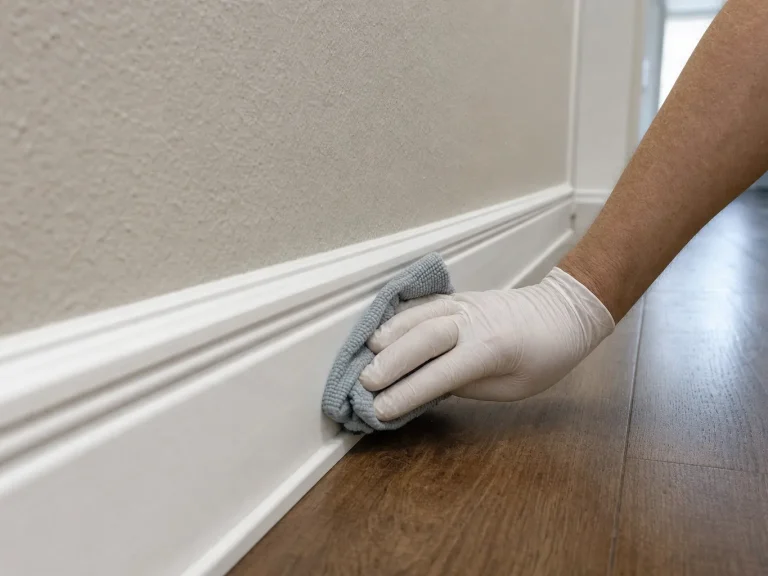
That is exactly what a deep cleaning is for. It reaches what weekly maintenance skips: baseboards, blinds, window tracks, ceiling fans, under beds and sofas, upholstery, and the corners where fine dust quietly ages. Booking one before pollen gets heavy means the season starts from a low baseline, so your everyday habits only need to hold the line instead of digging out of a deficit.
After the reset, keep expectations honest. Buildup returns at the speed of your household: kids, pets, open windows, and busy schedules all feed it. If you are wondering about a sensible rhythm, our guide to how often a house really needs a deep clean walks through it by household type. Homes with recurring cleaning on the calendar need deep cleans less often, because less ever gets the chance to accumulate.
The bottom line on allergy season cleaning
Portland’s pollen is a fact of geography, and no mop changes that. What cleaning changes is how much of it lives indoors with you: damp dusting, HEPA vacuuming, hot washed bedding, and clean entry points keep the indoor load down all season. If you want the heavy reset handled by people who do this every day, book deep cleaning for allergy season in Gresham with The Tidy Sister. We are woman-owned, licensed and insured since February 2015, and we clean without bleach. Call 503-666-2255 or text 503-875-1189 for a free customized quote.