Medical and dental office cleaning runs on two standards at once. Public zones (waiting room, reception, restrooms) need the same discipline as any busy office, applied more often, because the people touching those surfaces are frequently sick. Clinical zones (exam and treatment rooms) require EPA registered disinfectants used with correct dwell times, strict boundaries around what cleaners may touch, and reliable documentation. And some tasks, like instrument sterilization and sharps disposal, never belong to the cleaning crew at all.
If you run a practice, you already live with this split every day: front of house hospitality on one side of the door, clinical rigor on the other. A commercial cleaning partner has to respect both, and the good ones can explain exactly where their job ends and your clinical protocols begin. This post lays out what that looks like in practice.
How is medical office cleaning different from regular office cleaning?
Three ways: who visits, what lands on surfaces, and what a miss costs.
A regular office is populated by the same healthy-ish people every day. A medical or dental waiting room cycles through people who are actively unwell, alongside others whose immune systems cannot afford whatever the last visitor left on the chair arm. The surfaces work harder too: check-in counters, clipboards, card readers, and door plates get touched by more strangers per hour than almost any surface in a standard office. And the cost of sloppiness is different in kind, because patients read cleanliness as a proxy for clinical care. A scuffed baseboard in an accounting office is a scuffed baseboard. In an exam room, it makes people wonder about the instruments. Dental practices feel this even more sharply, since patients spend the whole visit staring at a ceiling and cataloguing everything in their peripheral view.
None of that changes the fundamentals of good janitorial work; it raises the frequency, tightens the products, and adds boundaries. For how recurring service differs from project work generally, see janitorial vs. commercial cleaning.
What do waiting rooms and reception areas need?
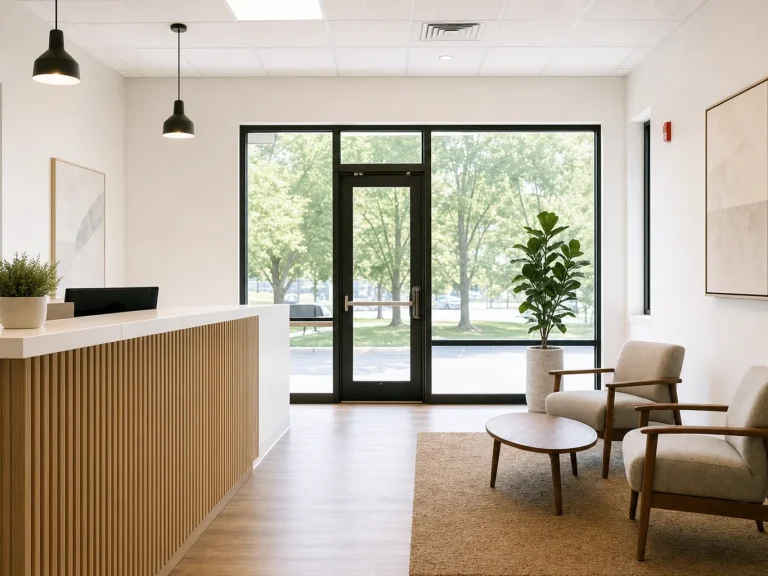
The front of a practice is a busy office lobby with higher stakes, so the baseline office cleaning checklist applies, tuned upward:
- High touch surfaces on every visit: door handles and plates, check-in counters, card readers, pens, seating arms, and the children’s corner if there is one
- Restrooms cleaned, disinfected, and restocked at least daily, with midday attention during heavy patient flow
- Floors handled daily: Gresham weather sends wet shoes and gravel through medical entrances from October to May, so entry mats and hard floor mopping carry real weight
- Fabric seating vacuumed on rotation, since upholstery holds what wipes cannot reach
- Magazines, toys, and shared objects managed by the practice’s own policy, because they cannot be meaningfully disinfected between every use
The waiting room is also where cleaning is most visible to patients, which makes it the cheapest reassurance a practice can buy.
Timing matters in front of house work too. Waiting rooms empty out on a schedule, which means the thorough daily clean can land after the last appointment while quick touch points, like a wipe of the check-in counter and a restroom glance, ride the natural gaps in the day. Practices that assign those midday touches to a specific front desk task, rather than to whoever happens to notice, keep the room presentable through the afternoon slump.
What do exam and treatment rooms require?
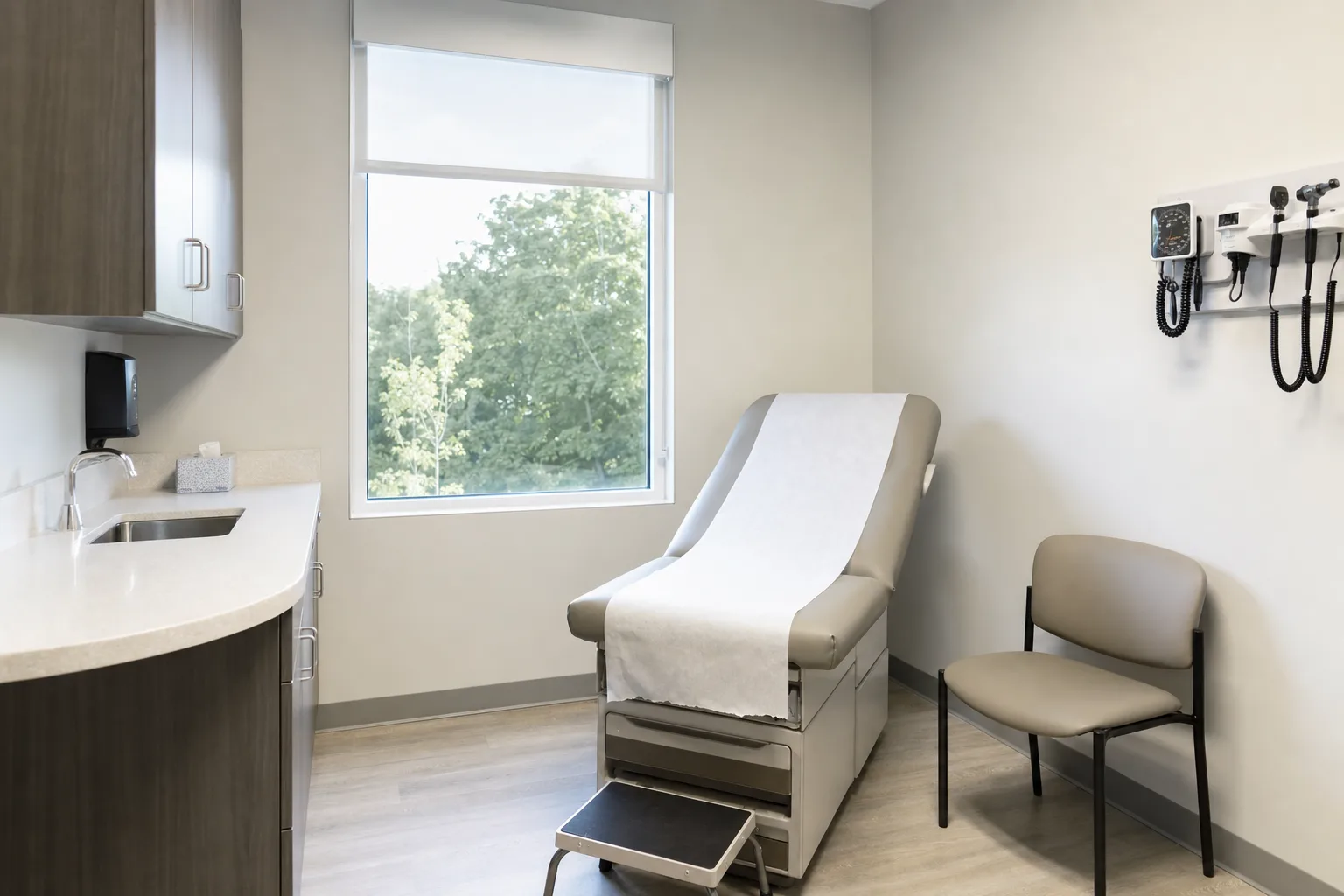
Clinical rooms run on a layered system, and the layers belong to different people. Between patients, clinical staff do the fast layer: wiping the exam table, changing paper, disinfecting immediate patient contact surfaces per the practice’s own protocol. The cleaning crew owns the thorough layer, usually after hours: counters, sinks, cabinet and drawer handles, light switches, door hardware, exam table frames and bases, stools, trash, and floors, all with EPA registered disinfectants applied properly.
Just as important is what the crew leaves alone. Instruments and instrument trays, sterilization equipment, medication areas, sharps containers, and anything red bagged sit outside a cleaner’s scope entirely. A trained crew cleans around those zones without touching them, and a good walkthrough marks them explicitly before the first visit.
Floors deserve a specific word here. Exam rooms collect what waiting rooms only sample: every patient, every shoe, every dropped tissue funnels through a few small rooms all day long. Daily hard floor care in clinical areas is standard practice, corners and baseboard edges included, because a floor that looks clean from the doorway and fails at the kick plate tells patients exactly which kind of clean the practice believes in.
Why do EPA registered disinfectants and dwell times matter?
EPA registration means a disinfectant has been tested and approved to make the specific claims on its label, including which organisms it works against and how long it needs to sit on a surface. That sitting time is the dwell time, and it is the most commonly violated instruction in all of cleaning: many products need minutes of visible wetness to do what the label promises.
A disinfectant only works for as long as the label says it must stay wet. Spraying and wiping in one motion is theater.
In practice this means a clinical cleaning routine is sequenced, not rushed: surfaces get cleaned of visible soil first (disinfectants are not cleaners), then treated and left wet for the labeled time, then addressed. A crew that cannot tell you the dwell times of its own products has not read its own labels. Ask to see the product list during the walkthrough, and keep a copy with your own protocol binder so the practice always knows what touches its surfaces. The Tidy Sister cleans without bleach as a standing policy, so product selection for clinical settings is specified per client. ‹confirm: which EPA registered, bleach free disinfectants The Tidy Sister uses for medical and dental clients›
Need a cleaning partner your patients can sense?
The Tidy Sister builds customized cleaning plans for Gresham practices, scheduled around patient hours and scoped around your clinical boundaries. Quotes are free, with replies usually within one business day.
Where does the cleaning crew’s job end?
This boundary protects patients, staff, and the cleaners themselves, and it should be written into any agreement. The division of labor:
| Task | Cleaning partner | Clinical or licensed staff |
|---|---|---|
| Floors, restrooms, waiting areas, regular trash | Yes | No |
| Counters, handles, switches, exam room hard surfaces | Yes, with proper disinfectants | Fast wipe downs between patients |
| Instrument cleaning and sterilization | Never | Always, per clinical protocol |
| Sharps containers | Never touched or emptied | Clinical staff and licensed disposal contractors |
| Biohazard and red bag waste | Never | Licensed medical waste handlers |
| Blood or body fluid spills | Only if specifically trained and agreed | Per the practice’s written protocol |
Any cleaning company that shrugs at this table is a liability. The ones worth hiring bring it up before you do.
What should a practice expect from a cleaning partner?
Beyond the mop work, five things separate a real medical cleaning partner from a generic crew with a new client:
- Consistent people. The same cleaner learns your rooms, your boundaries, and your quirks. The Tidy Sister assigns the same regular cleaner whenever possible for exactly this reason.
- Zone training. The crew knows public zones from clinical zones and treats them differently without being reminded.
- Scheduling around patients. Evening service after the last appointment keeps cleaning out of clinical hours; our Monday to Friday, 8 AM to 8 PM window covers most practice schedules.
- Documentation. A checklist signed per visit, and a communication channel for anything found or missed. Your compliance reviews will thank you.
- Real insurance. Licensed and insured is the floor, not a feature. The Tidy Sister has carried both since February 2015.
Heads up: no cleaning company can make your practice compliant. Regulations attach to the practice and its clinical protocols, and cleaning is one input among many. Be wary of any vendor promising compliance as a deliverable; what an honest partner promises is documented, consistent execution of the scope you set together.
How should a practice vet a medical office cleaner?
Four questions do most of the work. Ask what disinfectants the crew uses and what the dwell times are; a confident, specific answer is the tell. Ask them to walk your space and point out what they will not touch; the good ones find the sharps containers before you mention them. Ask who exactly will clean the office each visit and what happens when that person is out. And ask for the certificate of insurance rather than the sentence about it. A company that passes all four will also happily start with a trial period, because crews that expect scrutiny welcome it.
References close the loop. Ask for one practice the company already serves, then ask that office manager two questions: what happens when something gets missed, and how long the same cleaner has been coming. Those two answers describe your next year better than any brochure can.
The bottom line for medical and dental practices
Your patients judge the practice with their eyes before anyone takes their blood pressure, and your clinical team has better things to do at 7 PM than mop. The right cleaning partner holds the public zones to hospitality standards, the clinical zones to label-level disinfection, and the boundaries without exception. The Tidy Sister offers medical office cleaning in Gresham with customized scopes and free quotes: call 503-666-2255 or text 503-875-1189 to set up a walkthrough.