
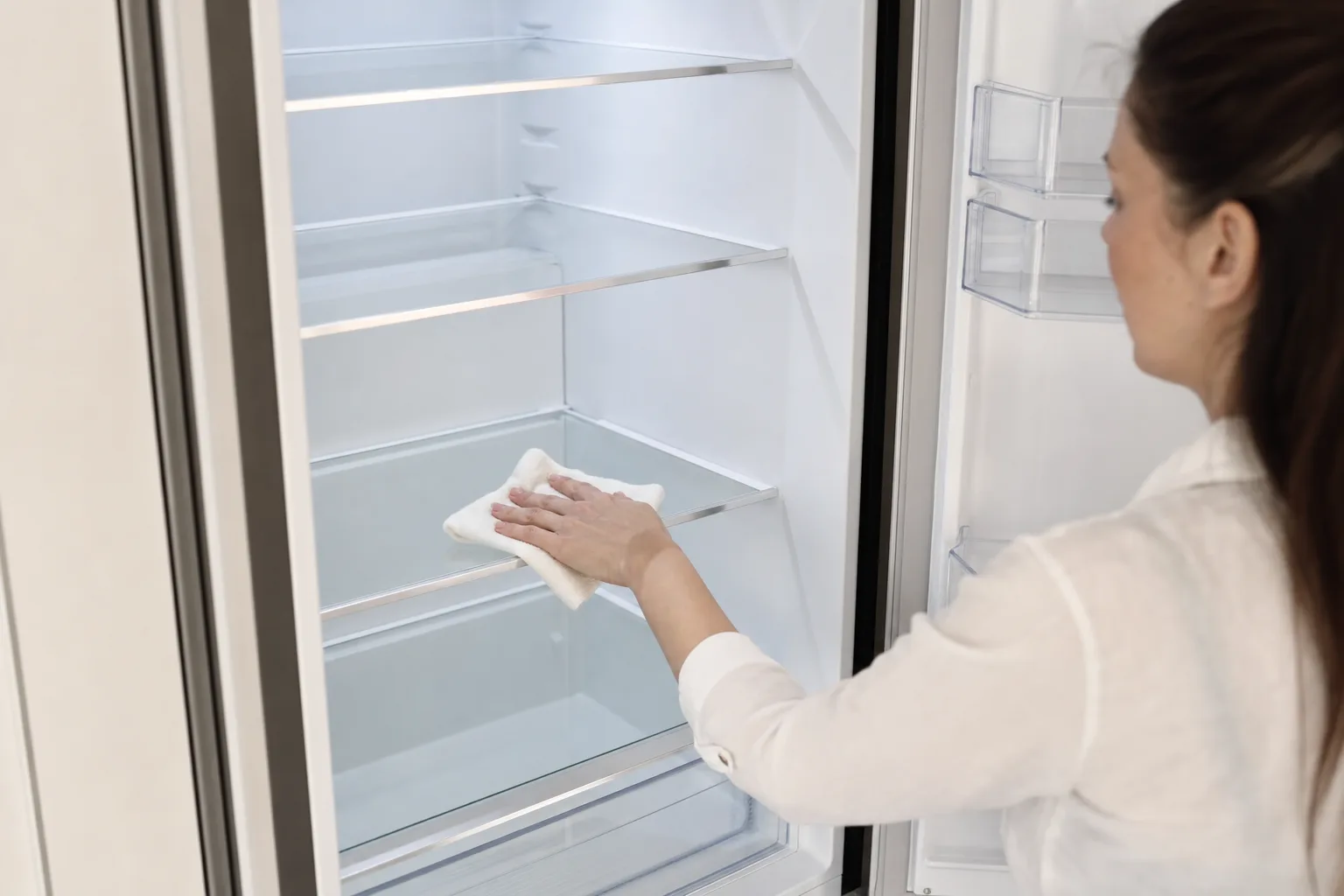
To deep clean a refrigerator, work one zone at a time: empty a shelf, toss what has expired, pull the shelf or drawer out, let cold glass warm up before washing it in warm water, wipe the interior top to bottom, scrub the door gasket folds, dry everything, and reload. Working zone by zone keeps your food cold the whole time, and the entire job fits comfortably inside an afternoon.
The refrigerator is the only appliance in the house that never gets a day off, and it shows its service quietly: a sticky ring under the syrup, a fossilized pea beneath the crisper, three open jars of the same mustard. A full reset is deeply satisfying and easier than it looks. It also pairs well with the rest of a serious house cleaning day, since the kitchen always sets the tone for the whole home.
When Is the Best Time to Deep Clean the Fridge?
Pick the day before your big grocery run, when the fridge is at its emptiest and there is the least food to shuffle. Bonus points if it is also the night before trash pickup, so the expired jars and mystery leftovers leave the property instead of ripening in the bin. Morning starts help too: shelves need time to warm up and air dry, and you want the job finished before dinner prep needs the kitchen back.
If a smell has already appeared, skip the scheduling logic and go now, because refrigerator odors only travel in one direction. And if a move is on the horizon in either direction, the fridge belongs near the top of the list: outgoing, because it is one of the first things a landlord or buyer opens, and incoming, because you are about to store your food in a stranger’s cleaning history.
How Do You Empty and Cull, Zone by Zone?
Resist the urge to empty the whole fridge onto the counter at once. Perishables warm up fast, and a counter full of everything turns a tidy project into triage. Instead, clear one zone at a time: top shelf first, then work down, then drawers, then the door. As each zone comes out, cull ruthlessly. Check dates, open the suspicious containers over the sink, and be honest about the condiment collection; if a jar has survived three cleanings without being used, it is a museum piece, not an ingredient. Wipe the bottoms of the jars that earn their spot back, because sticky jar rings are how clean shelves get dirty by Friday.
Why Should Cold Glass Shelves Warm Up First?
Because cold glass plus hot water equals a crack, sometimes a dramatic one. Glass shelves come out of the fridge at refrigerator temperature, and plunging them straight into a hot sink is a thermal shock the tempering does not always forgive. Set shelves and drawers on a towel on the counter and let them lose their chill while you work on the interior. When they no longer feel cold to the touch, wash them in warm, never hot, water with dish soap, rinse, and stand them to air dry on the towel.
The fastest way to crack a glass shelf is to be efficient about it: straight from the cold fridge into a hot sink. Let the glass warm up on the counter first.
What’s the Right Way to Wipe Down the Interior?
Top to bottom, so drips fall on surfaces you have not cleaned yet. Warm water with a little dish soap handles most of it, and a paste of baking soda lifts the stuck on rings and drips without scratching. Skip the harsh stuff entirely: strong chemical cleaners have no business in a box that holds open food, and their smell lingers in exactly the way you would guess. This is the same reason we clean without bleach in every home we serve. Work the shelf support channels and rails where crumbs collect, the ceiling of the box (there are always mystery dots up there), the walls, and finally the floor of the unit. Finish each zone by drying it with a clean towel, because standing moisture in a cold box becomes tomorrow’s mildew question.
Do not forget the parts of the door you touch a dozen times a day. Handles, the water and ice dispenser tray, and the edges where fingers land collect more grime than anywhere inside, and they are the surfaces guests actually see. The dispenser drip tray usually lifts out for a proper wash in the sink.
Want the fridge handled for you?
Refrigerator interiors are one of our add on services, easy to fold into any visit. Call or text for a free customized quote; most people hear back within one business day.
Why Is the Door Gasket the Most Skipped Part?
Because nobody looks at it, and it is doing hard duty in the dark. The rubber gasket that seals the door has folds that collect crumbs, drips, and eventually the dark mildew spots that make a clean fridge smell like a not clean fridge. Wipe deep into the folds with warm soapy water and a cloth wrapped over your finger, or a soft toothbrush for the stubborn lines, then dry it. A clean gasket also seals better, and the seal is what the whole appliance depends on to hold temperature without straining. While you are down there, check that the gasket still grips a sheet of paper when the door closes; a seal that has gone loose is worth mentioning to an appliance tech before it becomes a warm fridge mystery.
Worth knowing: the door gasket is the moldiest surface in most kitchens that nobody has ever looked at. If dark gunk in rubber folds sounds familiar, it is the same moisture and residue story told in why washing machines smell, just at a colder temperature.
What About the Drip Areas, Coils, and Underneath?
Many refrigerators have a drain channel at the back wall of the interior where defrost water exits; clear crumbs away from it so it can do its job, and wipe up any pooled water at the floor of the unit. The dusty zones live outside the box: condenser coils at the back or beneath the unit, and the toe grille at the front. Dust blanketing the coils makes the compressor work harder to shed heat, so a gentle pass with a vacuum brush helps the machine as much as the cleaning helps the kitchen. Unplug the refrigerator before touching coils, and get a helper before walking the unit out from the wall. ‹confirm: whether coil dusting and moving the refrigerator are included in The Tidy Sister’s refrigerator cleaning scope› Anything beyond dusting and wiping back there, strange noises, ice where it should not be, a drain that stays clogged, is appliance technician territory, and we will say so rather than poke at it.
How Do You Reload So It Stays Clean and Safe?
Reloading is where the deep clean either pays dividends or resets the clock on the next mess.
- Keep raw meat on the lowest shelf, ideally on a tray, so nothing drips onto food that will be eaten without cooking. This is the one food safety habit that matters most.
- Put the oldest of each item in front so it gets used first.
- Wipe jar bottoms and bottle rings before they go back.
- Consider washable shelf liners in the drip prone spots; lifting a liner beats scrubbing a shelf.
- Leave a little air space; a packed fridge cools unevenly and hides the science experiments.
A five minute weekly habit protects the whole afternoon of work: while putting groceries away, wipe any new rings, check the leftovers shelf honestly, and give the gasket edge a quick pass. The deep clean sets the baseline; the weekly pass is what keeps the baseline from drifting back toward archaeology.
Do You Need a Full Deep Clean or Just a Wipe Down?
Not every fridge day is a shelf by shelf day. Here is the honest split:
| Question | Quick wipe down | Shelf by shelf deep clean |
|---|---|---|
| What comes out? | Nothing, or one shelf’s worth | Everything, one zone at a time |
| What does it catch? | Fresh spills, sticky rings, visible crumbs | Gasket folds, shelf rails, drain area, the fossil layer under drawers |
| Time required | Minutes, while the coffee brews | An afternoon, start to finish |
| When it is the right call | Weekly upkeep and spill response | Seasonal reset, before holidays, after a smell appears, before or after a move |
If the deep clean day happens to be an appliance weekend, the oven is the natural next opponent, and our guide to cleaning your oven and knowing when to call the pros covers that job with the same honesty.
The Bottom Line on a Fresh Refrigerator
Zone by zone is the whole secret: food stays cold, counters stay sane, and no glass shelf meets hot water before its time. Cull hard, clean mild, dry everything, and give the gasket the attention it has been quietly earning for years. If you would rather open the door to that just cleaned smell without spending your afternoon on it, The Tidy Sister offers refrigerator cleaning in Gresham as part of our customized visits, woman owned and insured since February 2015. Call 503-666-2255 or text 503-875-1189 for a free quote.


