
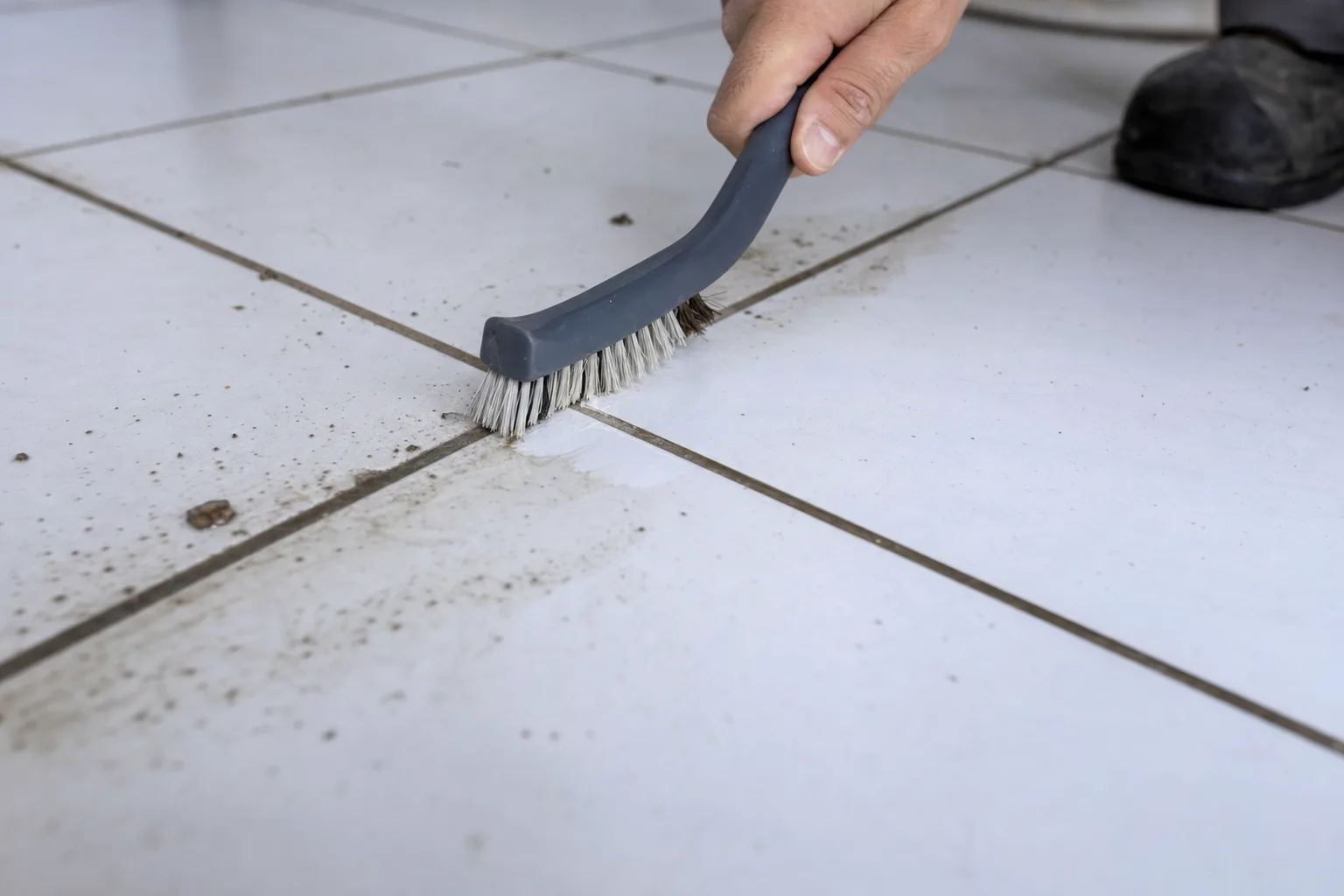
Grout gets dark because it is porous cement that wicks up soil, soap scum, and moisture like a sponge, and ordinary mopping often makes it worse by pushing dirty water down into those pores. Over time that trapped grime, plus mildew in damp bathrooms, turns the lines gray or black even when the tile looks clean. Restoring it takes an alkaline cleaner, dwell time, agitation with a stiff brush, and extraction, which is where professionals earn their keep.
That counterintuitive mopping detail catches most people off guard, so we will explain it plainly. This guide sits under our broader house cleaning work and focuses on the one surface that makes a whole bathroom or kitchen floor look tired no matter how shiny the tile is.
Why does grout darken in the first place?
Standard grout is a cement-based paste, and cement is porous. Every one of those tiny pores can hold water and whatever is dissolved in it. Foot traffic grinds soil into floor grout. In showers, body oils and soap scum feed mildew in the vertical lines. The grout does not merely get dirty on the surface, it absorbs the dirt down into itself, which is why a quick wipe never fully works. The color you are fighting is often soil that has soaked in below the surface.
There is a second layer to it in showers and tubs. Alongside ground-in soil, grout in a wet area collects mildew, a living growth that stains from within as it spreads. So a dark bathroom floor and a dark shower wall can look similar while having different root causes: the floor is usually soil, the shower is usually biological. That distinction matters because it changes the fix. Soil responds to a good alkaline cleaner and agitation, while mildew keeps coming back until you address the moisture feeding it, which is why the two get handled a little differently.
The mopping problem nobody mentions
Here is the honest, slightly annoying truth: mopping a tile floor can darken the grout rather than clean it. A mop glides across the smooth, sealed tile and does little there, then all that gray water settles into the lower, porous grout lines and soaks in. You are essentially wringing dirty water into the exact place you least want it. The tile looks fine and the grout keeps getting darker. That is not a failure of effort, it is the tool working against the material.
Why is grout worse in Pacific Northwest bathrooms?
Our long wet season keeps indoor humidity high for months, and bathrooms rarely get a real chance to dry out between showers. Mildew loves that standing dampness, and it settles into shower grout and the silicone edges around tubs. Homes on the Gresham Butte hillsides and older Craftsman houses near Main City Park often have bathrooms with small windows and modest ventilation, which makes the problem stubborn. The grime is partly soil and partly biological growth fed by moisture that never leaves.
What can you do yourself, and where are the limits?
DIY has a real ceiling with grout, but you can get meaningful results on lighter cases. A sensible home routine:
- Skip the mop for deep cleaning. Use an alkaline cleaner or a baking soda paste worked directly into the lines.
- Let it dwell. Give the cleaner several minutes to break down soil rather than scrubbing immediately.
- Agitate with a stiff grout brush or an old toothbrush, along the line, not across it.
- Rinse with clean water and blot up the loosened grime with a towel so it does not resettle.
- Dry the area and ventilate. In a shower, run the fan and wipe the walls down after use.
The limits are honest. Years of embedded soil, deep mildew staining, or grout that has eroded below the tile surface will not come back with a toothbrush. We skip bleach, which can lighten the stain briefly while doing nothing for the soil underneath and often coming back grayer.
Mopping cleans the tile and quietly feeds the grout. The floor looks fine while the lines you actually care about keep getting darker.
A local note: in a damp Gresham bathroom, ventilation does more for grout than any cleaner. Running the exhaust fan during and after every shower, and wiping the walls, starves the mildew of the moisture it needs. Cleaning fixes today, airflow prevents next month.
How do professionals restore grout?
A pro restore is a different process than home scrubbing, mostly in power and extraction. The general steps look like this:
- Apply a specialized alkaline grout cleaner and let it dwell to break the bond between soil and cement.
- Agitate mechanically, often with a powered brush that reaches into the pores a hand brush cannot.
- Extract the loosened slurry with a machine that pulls the dirty water up and out, rather than leaving it to resettle. This extraction step is the part home methods lack.
- Rinse and dry, then assess whether any lines need color restoration.
DIY versus a professional restore
The difference is not mystery chemicals, it is the extraction and the reach. A quick comparison:
| Factor | DIY scrubbing | Professional restore |
|---|---|---|
| Best for | Light, recent soil | Years of embedded grime |
| Dirty water | Often resettles into grout | Extracted and removed |
| Effort | Slow, on your knees | Powered agitation |
| Realistic result | Noticeably lighter | Closest to original color |
Tired of Gray Grout That Won’t Budge?
If the toothbrush has stopped making a difference, a professional restore reaches the soil your mop keeps feeding.
How do you keep shower grout from mildewing?
Shower grout is a different beast from floor grout because the enemy there is biological, not simply the soil you track underfoot. Mildew is a living growth, and it needs three things to spread: moisture, warmth, and something organic to feed on, which soap scum and body oils provide generously. Take away the moisture and the growth stalls. That is why ventilation beats scrubbing over the long run in a shower.
A few habits keep shower lines lighter for far longer:
- Run the exhaust fan during the shower and for a good stretch afterward, or crack a window if the bathroom lacks a fan.
- Keep a squeegee in the shower and pull the water off the walls after use, which removes most of the standing moisture in seconds.
- Wipe the lower corners and the silicone edges dry, since those pockets hold water longest.
- Avoid bar soap where you can, because it leaves more scum than liquid or gel body wash, and scum is mildew food.
None of this is glamorous, and all of it works. A bathroom that dries out between uses simply cannot grow the dark film that a perpetually damp one does. In our climate, where a bathroom might not see dry outdoor air for weeks, that mechanical drying step is the difference between grout you clean twice a year and grout you fight every month.
Colored and damaged grout
Two situations call for a lighter touch. Colored grout can fade or blotch under aggressive cleaners and especially under bleach, so test any product in a hidden corner first. Grout that is cracking, crumbling, or missing in spots is a repair question rather than a cleaning one, and scrubbing harder only accelerates the loss. In those cases a restore cleaning still helps the intact lines, but the damaged sections need regrouting to truly reset, which is a separate job from getting the color back.
Should grout be sealed after cleaning?
In principle, yes: sealing a porous cement grout after it is clean and dry slows how fast soil and moisture soak back in, which is exactly the mechanism that darkens it. A sealer buys you easier upkeep and a longer stretch between deep cleans. Whether we include sealing as part of a tile and grout service, and on what materials, is something to confirm for your specific floor. ‹confirm: whether grout sealing is included in Tidy Sister’s tile and grout scope› If sealing is not part of the visit, the restore still stands on its own, and you can seal separately afterward. One honest caveat: sealer is not permanent. It wears with traffic and cleaning, so plan on refreshing it periodically rather than treating it as a one-time fix, and know that even sealed grout benefits from the same direct-line cleaning and good ventilation that keep unsealed grout lighter.
The rest of your floors
Grout is one flooring headache with its own rules. If your home mixes tile with wood, the care could not be more different, and our guide to hardwood floor cleaning dos and donts covers what ruins a wood finish, including the same water-is-the-enemy theme. And if the darkening in your bathroom is more mildew than soil, our explainer on UV light and ozone disinfection is worth reading before you fall for any device that claims to zap a bathroom clean.
The bottom line on dark grout
Grout darkens because porous cement absorbs soil and moisture, and everyday mopping pushes dirty water right into it. Light cases respond to an alkaline cleaner, dwell time, and a stiff brush, but embedded grime and deep mildew need extraction that home tools lack. Good ventilation prevents the next round. When the lines have stopped responding to scrubbing, our team offers tile and grout cleaning in Gresham to bring the color back as close to original as the grout allows.


