
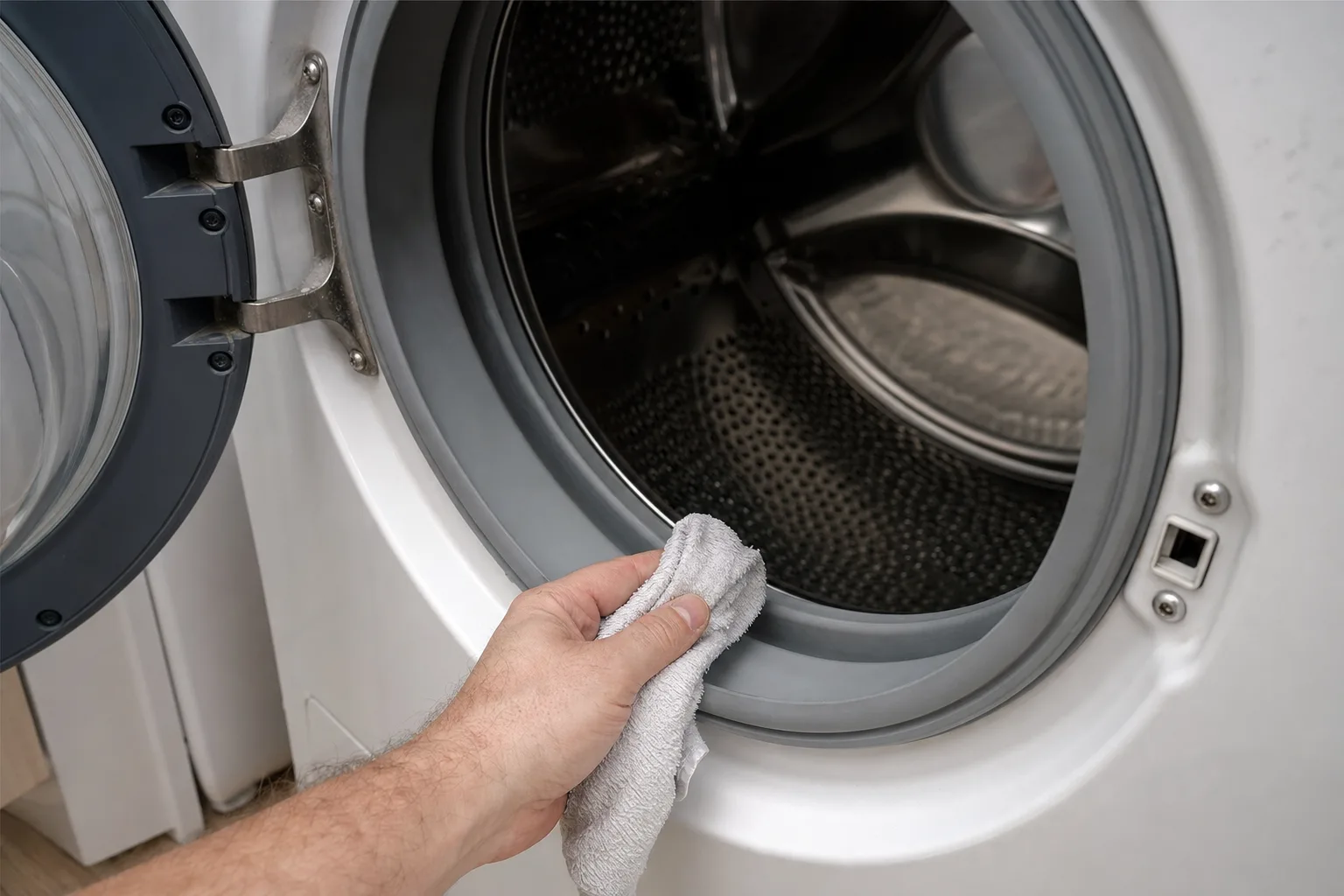
A washing machine smells because moisture and leftover residue collect in places that never fully dry: the rubber door gasket, the detergent drawer, and the drum itself. Warm damp fabric plus soap scum and body oils feed mildew and bacteria, which is what you smell. Front loaders are the usual culprits because their door seal traps water. The fix is drying those spots out, clearing the residue, and changing a few habits.
Most people treat the symptom with more detergent, which quietly makes the problem worse. If you want the honest mechanics and a fix that sticks, read on. This piece sits under our broader guide to house cleaning, and it pairs well with the appliance work our team handles during a deep visit.
What actually causes the smell?
Three ingredients have to meet: water that lingers, organic residue to feed on, and a warm dark pocket where air never moves. Your washer supplies all three. Fabric softener and heavy detergent doses leave a sticky film. That film grabs lint, dead skin, and hard water minerals. Add the humidity of a closed door and you have a small ecosystem living in your laundry room.
The smell reads as sour, musty, or faintly like a wet dog. It clings to clean clothes, which is the maddening part: you washed them and they came out worse.
There is also a hard-water wrinkle worth naming. In areas with mineral-heavy water, those minerals bond with soap to form a stubborn scum that ordinary rinsing leaves behind. That scum is rougher and stickier than plain detergent residue, so it grabs even more lint and grime. If your glasses spot and your kettle scales up, your washer is fighting the same buildup, and it needs the hot maintenance cycle a little more often than a soft-water household would.
Why front loaders smell more than top loaders
Front loaders use less water and seal shut with a flexible rubber gasket. Water pools in the folds of that gasket after every cycle, and it sits there in the dark. Top loaders drain more completely and often air out through a lid that does not seal tight, so they stay drier between loads. Neither design is immune, but the front loader gasket is where noses usually lead you.
Where does the odor hide?
Chase the smell to its rooms rather than masking the whole machine. The four usual suspects:
- Door gasket: peel back the rubber folds on a front loader and look for black speckling, hair, and standing water.
- Detergent dispenser: pull the drawer out. The back cavity often holds a slick of old softener and mold.
- Drum and filter: lint and coins collect in the front filter trap behind a small access panel on many front loaders.
- Drain area: if water never fully leaves, the standing pool goes stagnant. This one crosses into plumbing territory.
How do you clean a smelly washing machine?
Work from the visible parts to the internal cycle. Here is a sensible order:
- Wipe the gasket. Fold back the rubber, and with a damp cloth clear every crease of gunk and hair. A little white vinegar or a mild all purpose cleaner cuts the film. We skip bleach on principle and it is rarely needed here.
- Pull and wash the dispenser drawer in warm soapy water. Use an old toothbrush on the corners, then dry it before sliding it back.
- Check the front filter. Lay a towel down, open the small door near the floor, and empty the trap into a bowl. Rinse it and reseat it snugly.
- Run a hot maintenance cycle empty. Use your machine’s tub clean setting if it has one, or the hottest normal cycle with a washer cleaning tablet or a cup of white vinegar. This flushes the drum and hoses you cannot reach.
- Leave the door and drawer open to dry for a few hours after.
The smell is not a detergent shortage. It is water that never got to dry, so the real cure is airflow, not more soap.
Heads up: more detergent and more softener feed the film that causes the odor. If your clothes come out with residue, you are almost certainly overdosing. Try a smaller scoop and see if the smell eases over the next few loads.
Which method matches your smell?
Different odors point to different sources. This table matches the symptom to the likely cause and the first move.
| Smell or sign | Likely source | First fix |
|---|---|---|
| Musty on clean clothes | Gasket or drum biofilm | Wipe gasket, run hot tub-clean cycle |
| Sour, sharp odor | Old softener in dispenser | Remove and scrub the drawer |
| Rotten or sewage note | Standing drain water | Clear the filter, call a tech if it persists |
| Smell returns fast | Habits and overdosing | Leave door open, cut detergent dose |
How do you keep the smell from coming back?
Cleaning it once buys you a few weeks. Habits keep it gone. The routine that works:
- Leave the door and dispenser drawer cracked open between loads so the drum dries.
- Wipe the gasket dry with a cloth once a week, especially in the folds.
- Measure detergent to the load, not to the cap line. Less is usually plenty, and high efficiency machines need very little.
- Move wet laundry to the dryer promptly instead of letting it sit warm in the drum.
- Run a hot maintenance cycle monthly if you wash mostly cold, which most of us do now.
Cold washing is kinder to fabric and your power bill, but it never gets hot enough to kill off buildup. That monthly hot run is the tradeoff that keeps a cold-wash household honest.
Rather Not Wrestle the Gasket Yourself?
When a deep clean is on the calendar, our team can fold the laundry appliances into the visit so the whole utility room feels fresh.
Does the type of detergent matter?
It matters more than most people expect. High efficiency machines, which is nearly all front loaders and many modern top loaders, are built to run on very little water. Regular detergent produces far too many suds for that low water volume, and those extra suds do not rinse away. They linger as residue in the drum and hoses, which is exactly the film that feeds odor. If your machine has the HE symbol, use an HE detergent and use less of it than the cap suggests.
Fabric softener is the other quiet offender. It coats fabric with a waxy layer, and that same coating builds up inside the dispenser and drum over time. If your washer smells and you use softener on every load, that is a fair place to start cutting back. Wool dryer balls or a splash of white vinegar in the rinse do a similar softening job without leaving a residue behind. Pods and liquids tend to rinse cleaner than heavy powders in hard water, though any product overdosed will leave a film. The pattern is always the same: less product, better rinsing, fewer places for odor to take hold.
What about a musty front-load washer specifically?
Front loaders reward a specific habit. Because the door seals tight, the drum stays a closed, humid box between loads unless you intervene. After the last load of the day, wipe the gasket dry, pull the dispenser drawer out a couple of inches, and leave the door propped open overnight. That one routine does more to prevent smell than any cleaning tablet, because it removes the standing moisture the whole problem depends on. Many newer front loaders also have a dedicated tub-clean cycle with a reminder light. Run it when prompted rather than ignoring it, and the machine largely maintains itself.
When is it a plumber’s job, not a cleaner’s?
This is the honest line we draw. Wiping, scrubbing, and hot cycles handle odor that comes from residue and mildew. They do not fix a machine that will not drain. If you clear the filter and run a clean cycle and the water still pools in the drum, or the smell is sharply like sewage, that is a drain, pump, or standpipe issue. Call an appliance technician or a plumber. A house cleaner is not the right trade for a broken pump or a blocked drain line, and no amount of scrubbing solves a mechanical fault.
The rest of the laundry room
While you are down there, the smell often shares space with a dusty dryer vent and a grimy floor behind the machines. Those are cleaning jobs, and they matter for both odor and fire safety on the dryer side. If you are already deep cleaning the kitchen appliances, the same logic applies here: our shelf-by-shelf refrigerator deep clean follows the same empty, clear, and dry rhythm, and the oven cleaning guide covers the same DIY-versus-pro judgment call you just made about the washer.
The bottom line on a smelly washer
Your washing machine smells because water and residue sit in the gasket, drawer, and drum without a chance to dry. Wipe those spots, run a hot maintenance cycle, cut your detergent dose, and leave the door open between loads. If the odor is mechanical rather than mildew, hand it to a technician. When you would rather have the whole utility room and appliances handled as part of a visit, our team offers washing machine cleaning in Gresham alongside the rest of your regular clean.


